Emergency Preparedness

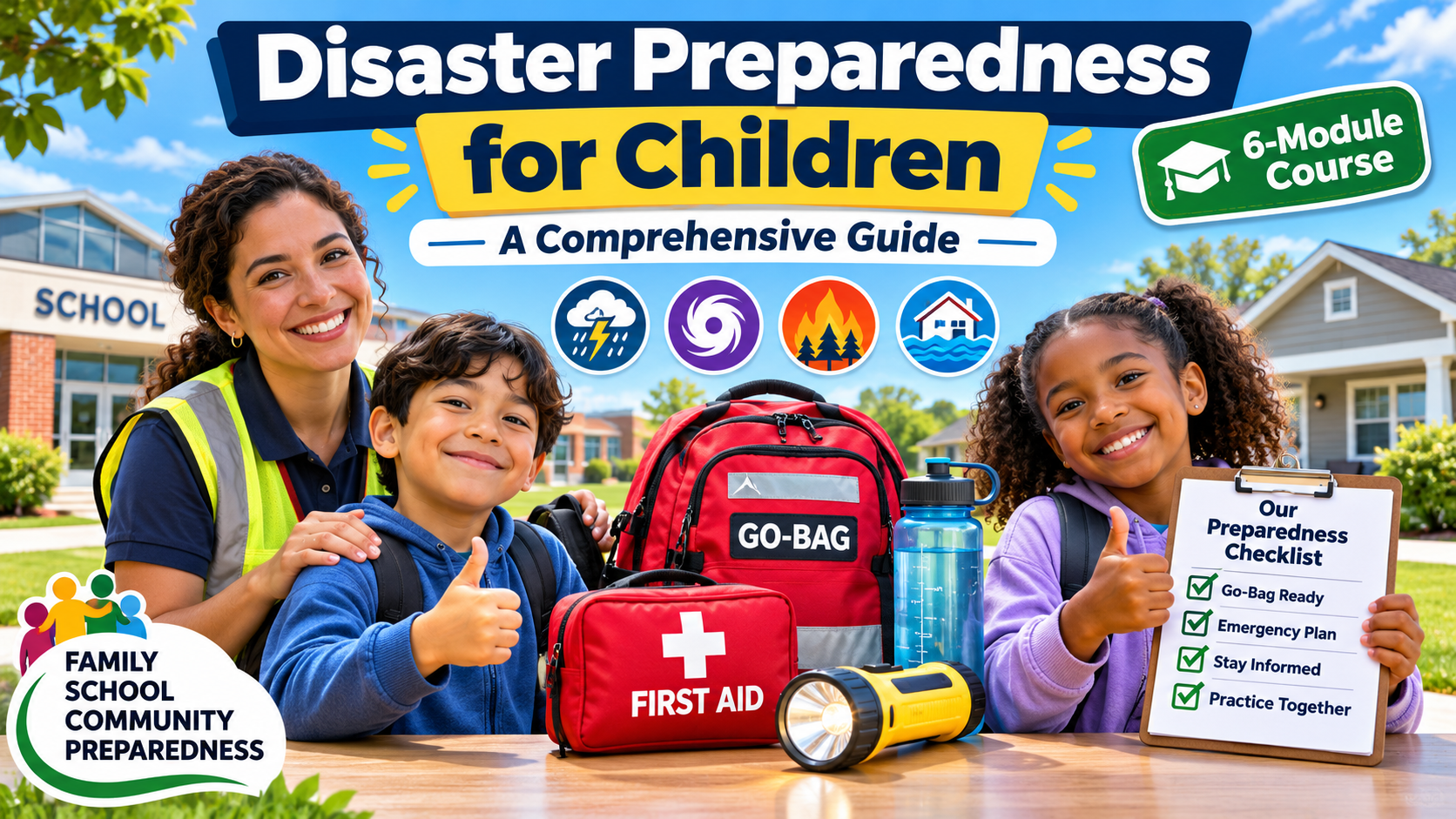
Disaster Preparedness for Children: Protecting Kids Before, During, and After Disasters

An evidence-based course on protecting children through every phase of a disaster: preparation, response, reunification, and recovery. Who this is for: parents and caregivers who want a plan that actually covers the children in their household; teachers, school nurses, child care and camp staff responsible for other people's children during the day; and health professionals (rehabilitation therapists, nurses, care coordinators, physicians, emergency planners) who serve children, including children with special health care needs. No prior emergency management training is required. Family and professional tracks run inside the same course, with professional resources and tasks labeled in-line. Learners build a Child Disaster Readiness Portfolio: a family plan, an Emergency Information Form and care map, a reunification flow, a psychological first aid role-play, a hazard action sheet, and a pediatric readiness and exercise plan. Resource selection draws on the curated libraries of the National Pediatric Disaster Coalition (npdcoalition.org).
Dr. Russ L'HommeDieu, DPT
6 Modules
12 Sections
0 Contact Hours

Multi-Modal Learning Experience

Read

In-depth content with text-to-speech

Watch

Curated video content from experts

Listen

Podcast episodes and audio resources

Apply & Reflect

AI-coached practice and reflection

Course Outline

1
Module 1: Children Are Not Small Adults, and Family Readiness
After this module, the learner can explain how children's physical, developmental, emotional, and social differences change disaster risk, and can build a child-specific family plan that names who picks up each child, where the family meets, and how a child who is alone can identify themselves and get help.
2 sections

Why Children Are Different in Disasters

Plan, Kit, Practice: Building the Family Plan

Module Quiz Required to Progress
2
Module 2: Children and Youth with Special Health Care Needs
After this module, the learner can complete an Emergency Information Form and a care map for a child with special health care needs, and can build a plan that keeps that child safe when power, pharmacies, therapy, and routines are disrupted at the same time.
2 sections

The Emergency Information Form and the Care Map

When Power, Pharmacies, and Routines Stop

Module Quiz Required to Progress
3
Module 3: Schools, Child Care, and Reunification
After this module, the learner can judge whether a school, child care center, or camp is ready for an emergency, and can design or support a reunification process that verifies identity and custody before a child is released.
2 sections

What a Ready School or Child Care Program Looks Like

Planning Reunification Before It Is Needed

Module Quiz Required to Progress
4
Module 4: Psychological First Aid, Coping, and Recovery
After this module, the learner can offer psychological first aid to a child using Listen, Protect, Connect, recognize age-typical stress reactions and the warning signs that call for referral, and protect their own wellbeing as a helper.
2 sections

Psychological First Aid: Listen, Protect, Connect

Who Needs More: Reactions by Age, Referral, and Caring for the Helper

Module Quiz Required to Progress
5
Module 5: Hazard-Specific Protective Actions for Children
After this module, the learner can identify the two or three hazards most likely in their community and adapt protective actions for each hazard to the age and needs of each child.
2 sections

Your Local Hazards: Water, Wind, Heat, and Cold

Smoke, Shaking, Chemicals, and Violence

Module Quiz Required to Progress
6
Module 6: Health Care and Community System Readiness
After this module, the learner can measure an organization's pediatric readiness with national tools, identify the highest-value gaps (starting with a named pediatric emergency care coordinator), and plan a pediatric exercise that tests surge, triage, reunification, and family needs.
2 sections

Measuring Pediatric Readiness

Surge, Triage, Infant Feeding, and the Pediatric Exercise

Module Quiz Required to Progress

Final Examination

25 questions | 80% required to pass

Ready to Begin?

Create an account or sign in to enroll and start your learning journey.